Published by Alphapressmedia
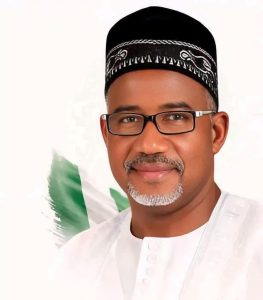
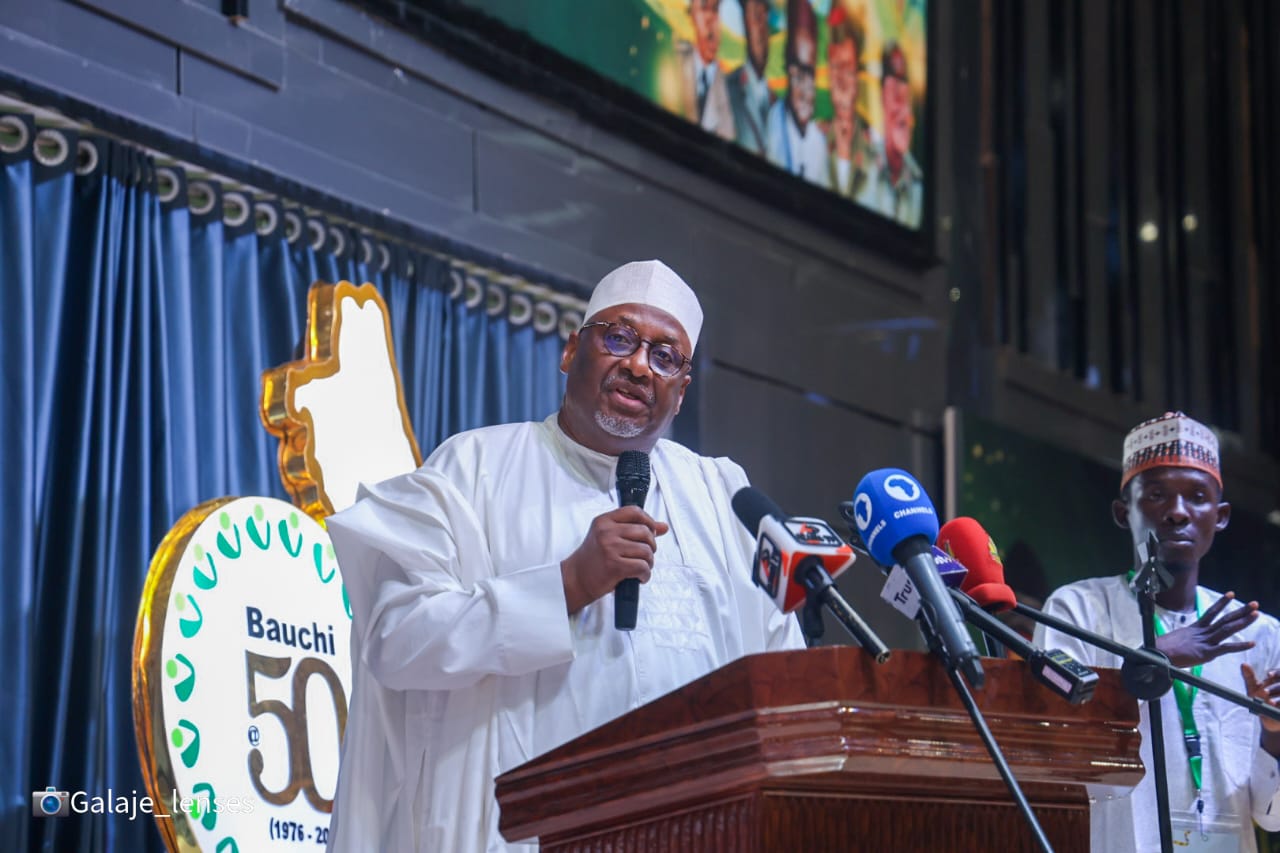
As Bauchi State marks fifty years of existence, reflections on leadership, governance, and transition have naturally taken centre stage. One such reflection came from former Governor of Bauchi State, Alhaji Ahmed Adamu Mu’azu, whose remarks at the Bauchi @50 public lecture have since stirred public conversation.Mu’azu’s advice to the next administration—urging it not to expend valuable time probing the outgoing government of Senator Bala Abdulkadir Mohammed, but instead to consolidate on existing achievements—was not merely a political comment. It was a statement rooted in experience, institutional memory, and an understanding of how governance either progresses or stalls.At the heart of his counsel lies a familiar but unresolved dilemma in Nigeria’s democratic journey: the balance between accountability and continuity. While transparency and oversight remain essential pillars of democratic governance, history has repeatedly shown that prolonged probes, when driven more by politics than policy, often distract from service delivery and development.“Governance should be about continuity, not distraction.”Mu’azu’s intervention is therefore best understood as a call for prioritisation. Governments, particularly in transitional moments, face limited time and enormous expectations. How that time is used often defines their success or failure. In many instances across the country, incoming administrations have chosen to begin their tenure looking backwards—setting up panels, reopening files, and engaging in political battles—only to discover later that the clock has quietly run down.What gives Mu’azu’s statement added weight is his acknowledgement of the visible developmental footprint across Bauchi State in recent years. Infrastructure expansion, urban renewal, investments in education and healthcare, and renewed attention to rural communities have altered the development landscape. These are tangible assets—public investments that transcend personalities and political cycles.The former governor’s position does not suggest that governance should be free from scrutiny. Rather, it argues that scrutiny should not paralyse progress. Functional institutions, due process, and statutory oversight bodies already exist to handle accountability without turning governance into a prolonged contest of blame.Equally significant is Mu’azu’s message to those eyeing the governorship in 2027. His insistence on a “clear and achievable blueprint” reframes political ambition as a responsibility, not a slogan. In a political climate often dominated by rhetoric, his emphasis on ideas, feasibility, and continuity challenges aspirants to present substance rather than sentiment.Perhaps most striking is his declaration that competence, not party affiliation, would guide his support. In a deeply polarised political environment, such a stance resonates with citizens who increasingly judge leadership by results rather than labels. It also reinforces a broader truth: development is cumulative. Roads, schools, hospitals, and institutions do not belong to any one administration; they belong to the people.As Bauchi State looks beyond its golden jubilee, the lesson embedded in Mu’azu’s remarks is instructive. Progress is rarely achieved by dismantling existing structures simply to appear different. It is achieved by strengthening what works, correcting what does not, and keeping governance focused on the future rather than trapped in the past.Transitions should mark renewal, not regression. In that sense, Mu’azu’s counsel is less about defending any individual administration and more about defending the principle of responsible governance—one anchored on continuity, vision, and maturity.For Bauchi State, the challenge ahead is clear: to ensure that leadership changes do not interrupt development, and that politics never overshadows the primary duty of government to serve the people.
-Abdulwahab Muhammad Senior Special Assistant on Communication, Bauchi State
Disclaimer: The views expressed in this article are personal reflections of the author and do not represent an official position of the Bauchi State Government.