By Abdulwahab MuhammadSenior Special Assistant on Communication to the Governor of Bauchi State
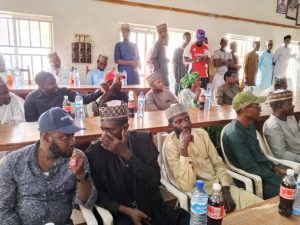
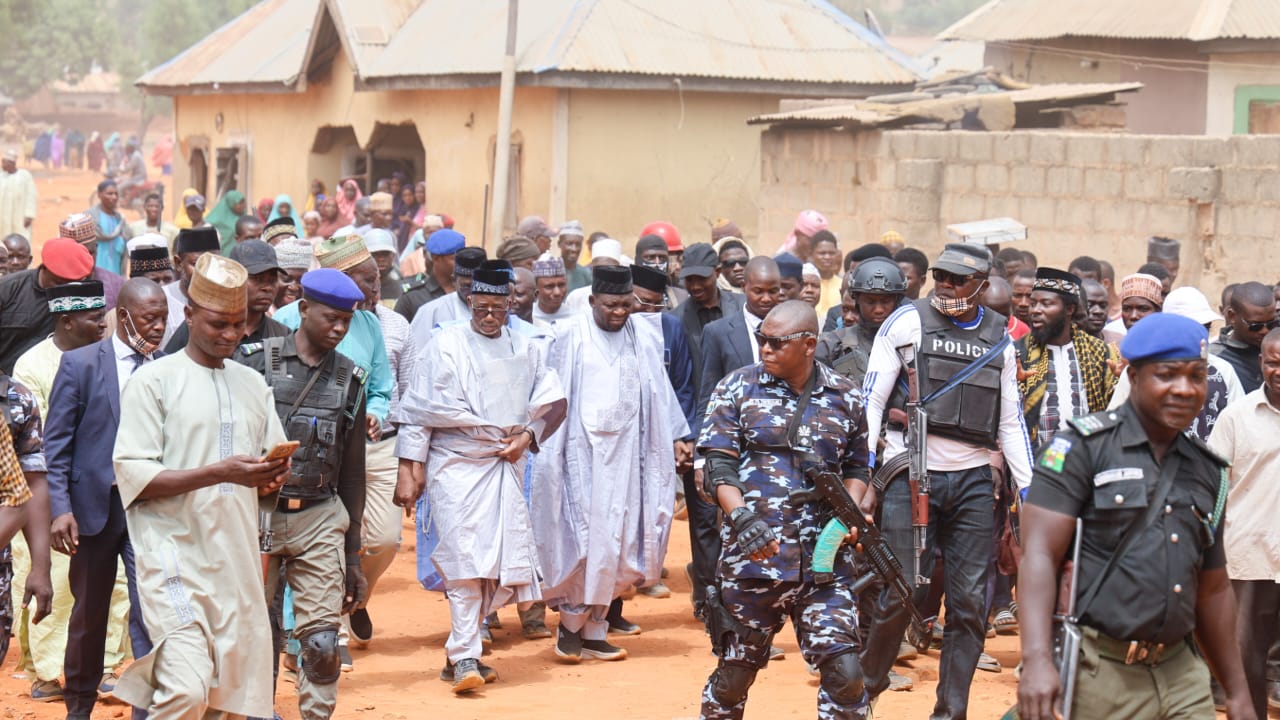
The recent visit by Bala Mohammed to displaced families in Kashere, Gombe State, is more than a routine show of sympathy. It is a warning signal — a clear indication that the security crisis in Northern Nigeria is evolving into a new and dangerous phase.What is unfolding along the Bauchi–Gombe border is not random violence. It is structured, strategic, and expanding.And now, it has reached a point where state response alone is no longer sufficient.A New Theatre of Insecurity is EmergingRecent intelligence and field reports indicate that thousands of heavily armed bandits have moved into forest corridors around Alkaleri Local Government Area, particularly within the Dajin Madam axis — an area fast becoming an ungoverned security vacuum.This shift is not accidental.As military pressure intensifies in parts of the North-West, armed groups are migrating, regrouping, and establishing new strongholds in less-policed territories. The Bauchi–Gombe–Taraba belt is now clearly within their new operational map.If left unchecked, this axis risks becoming the next epicentre of banditry in Nigeria.Kashere: Where the Human Cost is VisibleIn Akko Local Government Area, thousands of displaced persons from Futuk, Mansur, Gwana and surrounding communities are currently sheltered at Kashere Central Primary School.Families have been uprooted.Schools have become shelters.Livelihoods have been suspended.During his visit, Governor Bala Mohammed not only commiserated with the victims but announced an immediate ₦50 million relief support to assist displaced families and host communities.The gesture was both humanitarian and symbolic — a reassurance that the government stands with its people even in the most difficult times.From Sympathy to State ActionThe Governor’s response did not stop at empathy.Within 24 hours of the visit, Governor Bala Mohammed proceeded to Abuja and met with President Bola Ahmed Tinubu at the Aso Rock Presidential Villa, where he formally presented the security situation and requested urgent federal intervention.The discussions focused on:Immediate military reinforcement in border communitiesExpansion of aerial surveillance and drone operationsEnhanced arms, logistics and mobility support for security forcesStructured training and integration of vigilantes and forest guardsThis engagement underscores a fundamental reality:While governors are constitutionally chief security officers, they do not control the military architecture required to prosecute conflicts of this scale.Why This Crisis is DifferentBanditry in Northern Nigeria has entered a new operational phase:Armed groups are now crossing state boundaries with easeForest belts are being used as permanent operational basesRecruitment networks are expanding to include local collaborators and displaced economic actorsThis is no longer a series of isolated attacks.It is an adaptive insurgent-style threat.The Case for Regional Security CoordinationRecognising this evolving threat, Governor Bala Mohammed has initiated plans for a joint security summit involving Bauchi, Gombe, Taraba and Benue States.The objective is clear:Launch a coordinated regional offensiveBlock cross-border escape routesReclaim forest territoriesEstablish sustained security presence in vulnerable corridorsBecause without coordination, security operations will remain fragmented and reactive.The Humanitarian and Economic ConsequencesBeyond the immediate violence lies a deeper crisis.Over 100,000 citizens have been displaced.This has triggered:Disruption of farming cyclesLoss of food production capacityClosure of schoolsPressure on host communitiesIncreased poverty and vulnerabilityIf farmlands remain inaccessible, the consequences will extend beyond security in to food supply, inflation, and long-term regional instability.What Must Be Done: A Three-Layered ResponseTo prevent escalation, Nigeria must adopt a multi-dimensional strategy:1. Immediate Security SurgeDeploy coordinated military operations into forest strongholdsEstablish forward operating bases along border corridorsIntensify aerial reconnaissance and drone surveillance2. Strengthen Community Defence SystemsTrain, regulate and equip vigilante groupsIntegrate local intelligence into formal security structuresProvide communications and mobility support for forest guards3. Long-Term Stabilisation and RecoverySafely resettle displaced communitiesRebuild homes, schools and health facilitiesProvide economic alternatives for at-risk youthBecause security is not achieved by force alone — it requires trust, intelligence, and economic inclusion.The Role of Traditional and Local InstitutionsEncouragingly, traditional leadership structures are already playing a role.The Emir of Pindiga, Alhaji Muhammad Seyoji Ahmad, has pledged continued cooperation in mobilising community support for peacebuilding.This local legitimacy is a critical pillar in sustaining long-term stability.A National Test of WillWhat is happening in the Bauchi–Gombe corridor is not just a local security issue.It is a national test of coordination, leadership, and urgency.Nigeria has overcome security challenges before. It can do so again.But success will depend on:How quickly we actHow effectively we coordinateHow strongly we support affected communitiesThe message from Kashere is unmistakable:The people may be displaced —but they are not abandoned.Through decisive leadership, humanitarian support, and direct federal engagement, Governor Bala Mohammed has sent a clear signal:The government is present. The government is responsive. The government is acting.Now, the moment calls for collective national action — from federal authorities, neighbouring states, security agencies, and citizens alike.Because when borders begin to burn,Silence is no longer an option.Published by AlphapressmediaInforming. Engaging. Empowering.
End