Pilot Programme Unveils Four Community Pad-Making Enterprise Hubs
Published by Alphapressmedia
By Aliyu Bala Gerengi
GOMBE — The North East Development Commission (NEDC) has launched the “Pads to Prosperity” Community Pad-Making Enterprise Programme in Gombe State, unveiling an ambitious initiative designed to combine menstrual health and dignity with women’s economic empowerment and sustainable community enterprise development.
The Gombe pilot seeks to move beyond the conventional distribution of sanitary products by equipping beneficiaries with practical production skills and creating an ecosystem through which locally produced reusable sanitary pads can generate income, improve menstrual hygiene and support girls’ education.
Implemented by Virtuous Reusable Pads, with Herbloom Technologies Africa as technical partner, the programme has the theme: “From Skills to Sustainable Enterprise: Building Health, Creating Wealth, Transforming Communities.”
The launch attracted representatives of the NEDC, government institutions, development partners, civil society organisations, traditional leaders, education and health stakeholders, as well as women and youth groups.
Speaking at the event, NEDC Gombe State Coordinator, Engr. Usman Muhammad, said the initiative aligns with the Commission’s commitment to interventions that improve the wellbeing of communities across the North-East while creating sustainable economic opportunities.
He said empowering women and girls with productive skills and opportunities for enterprise could create benefits extending beyond individual beneficiaries to families and entire communities.
The programme featured an official opening address by Mallam Lawal Hamidu, an NEDC Executive, while Dr. Constance, also of the Commission, delivered a keynote address focusing on the connection between menstrual health, wealth creation and community transformation.
In a welcome address titled “Beyond Pads: Unlocking Possibilities Through Pads to Prosperity,” the Chief Executive Officer of Virtuous Reusable Pads highlighted the wider economic opportunities that could emerge from local sanitary-pad production.
The Programme Lead of Virtuous Reusable Pads subsequently presented the initiative’s enterprise model, explaining how beneficiaries could progress from acquiring production skills to establishing sustainable community-based enterprises.
Quality, Dignity and Inclusion
A major component of the programme is quality assurance.
Mrs. Ruth Ugo of Herbloom Technologies Africa led a Quality Gate session and live demonstration focusing on sanitary-pad production standards and the importance of maintaining quality throughout the manufacturing process.
The programme also devoted attention to menstrual dignity and inclusion for girls with special needs.
A strategic session involving the Adolescent Girls Initiative for Learning and Empowerment (AGILE) examined the relationship between menstrual health, girls’ education, dignity and empowerment, highlighting the need to ensure that menstruation does not become a barrier to school attendance and educational opportunities.
Representatives of the Gombe Network of Civil Society also participated in an experience-sharing session.
A stakeholder investment session led by Alhaji Rufai of NEDC focused on moving the programme from intervention to investment, with stakeholders encouraged to support structures capable of sustaining the initiative beyond its pilot phase.
Stakeholders Push for Local Ownership
The second phase featured panel discussions bringing together stakeholders from government institutions, education, health, women affairs, civil society and traditional leadership.
One of the panels, moderated by Dr. Esther Ishaya, featured representatives including Hajiya Maimuna Abubakar of the National Orientation Agency (NOA); Dr. Aishatu Umaru Maigari from the education sector; Lawan Bala from the health sector; Fatima Umar Abubakar, Fulanin Gombe; Dr. Amina Haruna Abdul of AGILE; and representatives of traditional leadership.
Another panel, moderated by Mr. Iriya Ishaya, brought together stakeholders from Gombe, Dukku, Funakaye and Yamaltu Deba Local Government Areas to examine how the project could transition from an externally supported intervention to locally owned and sustainable enterprises.
Participants emphasised that community ownership, market development and sustained stakeholder collaboration would be critical to the long-term success of the programme.
Four Pad-Making Hubs Unveiled
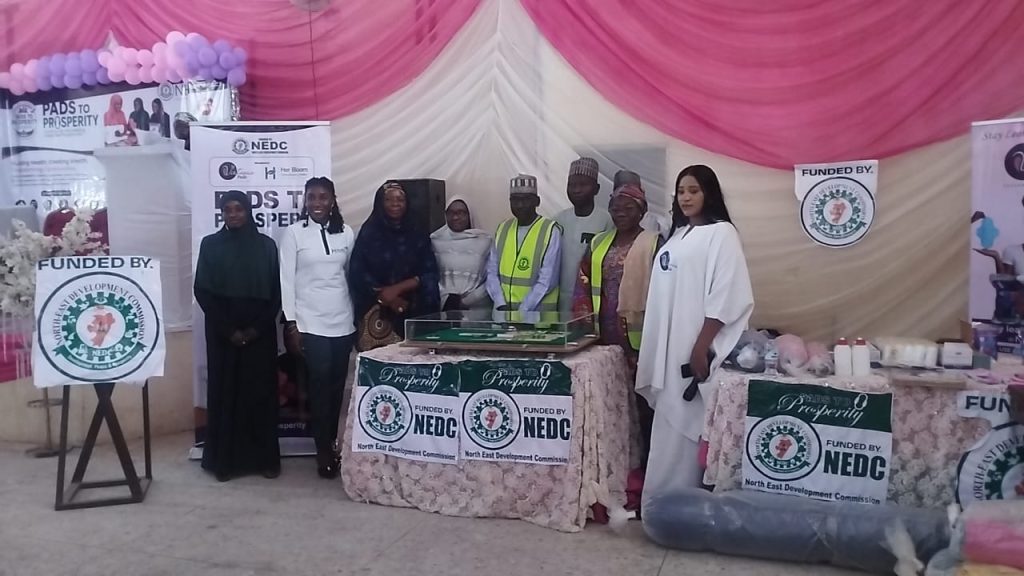
One of the major highlights of the ceremony was a Strategic Showcase and Unveiling, during which the architectural concept and floor plans for four proposed community pad-making enterprise hubs were presented.
NEDC executives and team members joined the Programme Lead of Virtuous Reusable Pads and representatives of Herbloom Technologies Africa for the unveiling.
The Lead Coordinator, Mr. Lass Batti Cornelius, supported by Miss Soki Aliabo and Mrs. Ruth Ugo, also led a stakeholder engagement session highlighting the importance of collaboration, community participation and institutional support in achieving sustainable outcomes.
The ceremony climaxed with the official launch and declaration of the Pads to Prosperity Pilot Programme by the NEDC Executive.
Selected participants and stakeholders were also given an opportunity to share their perspectives on what prosperity means to them.
The programme concluded with a vote of thanks, guided exhibition, quality-assurance tour, media interviews and networking among participating organisations.
Beyond Sanitary Pads
According to the organisers, Pads to Prosperity is deliberately structured to go beyond sanitary-pad production.
The initiative seeks to create an integrated ecosystem connecting skills acquisition, quality assurance, menstrual dignity, girls’ education, inclusion, entrepreneurship, local ownership, market access and sustainable enterprise development.
By combining menstrual-health intervention with economic empowerment, the Gombe pilot could provide a model for addressing two interconnected challenges: ensuring that women and girls have access to appropriate menstrual-health products while creating sustainable livelihood opportunities within their communities.
If successfully implemented and sustained, the Pads to Prosperity programme is expected to improve menstrual hygiene and dignity, strengthen girls’ participation in education, expand economic opportunities for women and establish viable community enterprises across Gombe State.