Bauchi Pushes Farmers, Manufacturers, Agro-Processors to Explore Duty-Free West African Market
A potentially bigger market is opening for businesses in Bauchi and across the North-East as the Federal Government intensifies efforts to connect local manufacturers, farmers, livestock producers and agro-processors to millions of consumers across West Africa through the ECOWAS Trade Liberalisation Scheme, ETLS.
The Federal Government says businesses in the region can no longer afford to concentrate solely on the Nigerian market when opportunities exist under the regional trade framework for qualifying locally produced goods to access markets across ECOWAS member states under preferential duty-free arrangements.
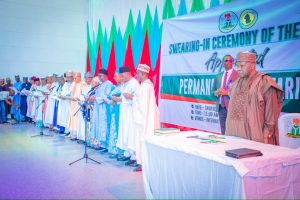
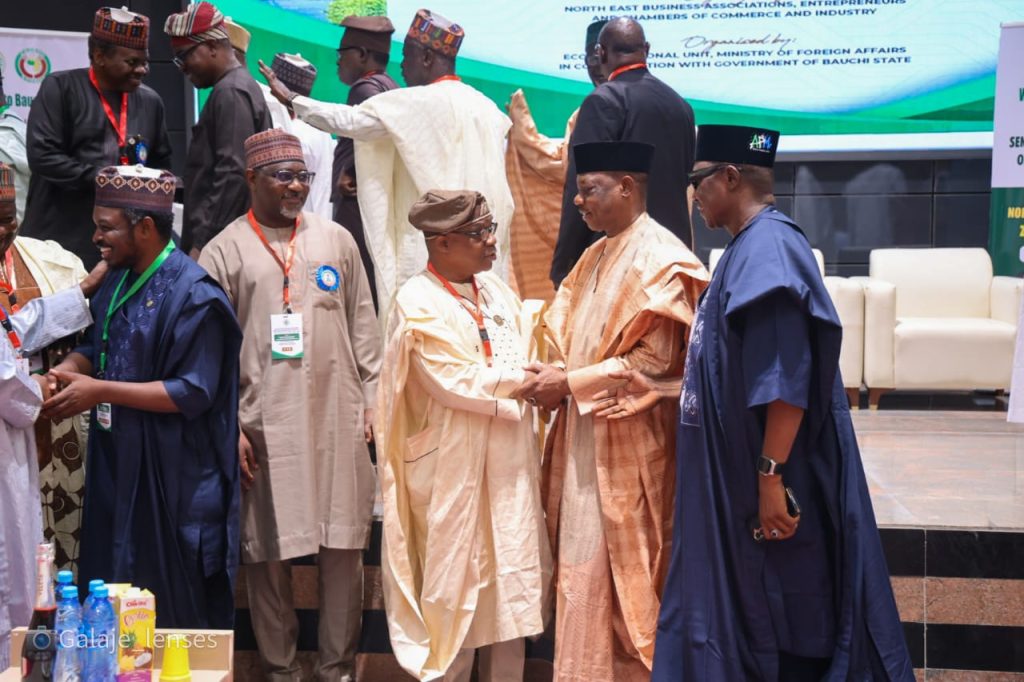
Minister of State for Foreign Affairs, Ambassador Sola Enikanolaiye, stated this at a sensitisation workshop on the ECOWAS Trade Liberalisation Scheme held in Bauchi.
The Minister, who was represented at the workshop, explained that ETLS was established to facilitate the free movement of qualifying goods originating within ECOWAS and promote greater economic integration among member states.
He said increased awareness and compliance with the requirements of the scheme could enable Nigerian manufacturers, farmers, agro-processors and Micro, Small and Medium Enterprises to expand their operations, increase production and explore opportunities in the wider West African market.
According to him, the workshop, organised by the Federal Ministry of Foreign Affairs, was designed to close the information gap between the enormous opportunities available under ETLS and the level of knowledge among businesses expected to benefit from the initiative.
The Minister also linked stronger participation in regional trade to Nigeria’s ambition of building a one-trillion-dollar economy by 2030, stressing that increased production, industrialisation, value addition and export competitiveness would be critical to achieving the target.
BAUCHI EYES BIGGER MARKET FOR NORTH-EAST PRODUCTS
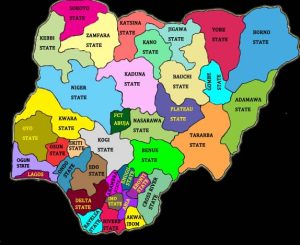
For Bauchi State, the regional trade initiative presents an opportunity to transform its agricultural and natural resources into commercially competitive products capable of reaching consumers beyond Nigeria.
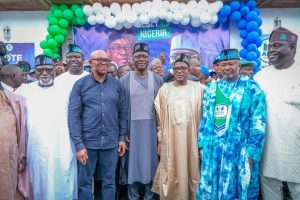
Speaking on behalf of Governor Bala Abdulkadir Mohammed, the Deputy Governor said Bauchi and other North-East states must begin to regard regional integration as an economic opportunity rather than merely a diplomatic concept.
He said the region possesses enormous agricultural, livestock, mineral and industrial potential that could support production for both domestic consumption and export.
With greater investment in processing, packaging, standardisation and value addition, he said products originating from the North-East could compete effectively in markets across the West African sub-region.
The Governor maintained that taking advantage of ETLS could help businesses expand their customer base, encourage increased production, stimulate industrial development and ultimately create more employment opportunities, particularly for young people.
TRADE BARRIERS MUST BE ADDRESSED
Despite the opportunities, Governor Bala Mohammed identified several obstacles that continue to undermine seamless regional commerce.
These include delays at borders, multiple checkpoints, inadequate transport infrastructure, non-tariff barriers and limited access to reliable information on regional trade procedures.
He stressed that removing such impediments would make it easier for legitimate businesses to transport their products across borders and fully benefit from regional economic integration.
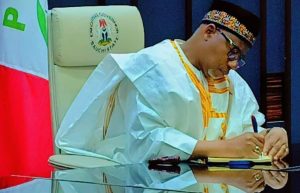
The Governor reaffirmed the commitment of the Bauchi State Government to policies and programmes aimed at improving the business environment, attracting private investment, encouraging industrialisation and creating jobs.
WHY BAUCHI?
Earlier, the Permanent Secretary of the Federal Ministry of Foreign Affairs, represented by a senior official of the Ministry, Alhaji Ali Gombe, explained that Bauchi was selected to host the workshop because of its strategic location and economic potential within the North-East geopolitical zone.
He said bringing together Chambers of Commerce and Industry, entrepreneurs, government institutions, regulatory agencies and other stakeholders was important in increasing the region’s contribution to Nigeria’s trade with neighbouring West African countries.
The Permanent Secretary emphasised that the success of ETLS would depend largely on effective cooperation among the Federal Government, state governments, regulatory institutions and the organised private sector.
The Bauchi workshop therefore provided businesses in the North-East with an opportunity to better understand the requirements of the scheme, improve compliance and explore how locally produced goods can penetrate wider regional markets.
Beyond sensitisation, the challenge now before entrepreneurs across the region is to translate the North-East’s abundant agricultural, livestock and mineral resources into finished and competitive products.
For Bauchi in particular, successful utilisation of the ETLS could mean something much bigger than cross-border trade — it could provide new markets for local production, attract investment, encourage value addition and generate employment while positioning the state as an important commercial gateway between Nigeria and the wider West African economy.
By Abdulwahab Muhammad, SSA Communication to the Governor of Bauchi State
Published by Alphapressmedia.com