…Claims pro-Atiku chants at APC event expose gap between political mobilisation and genuine voter support
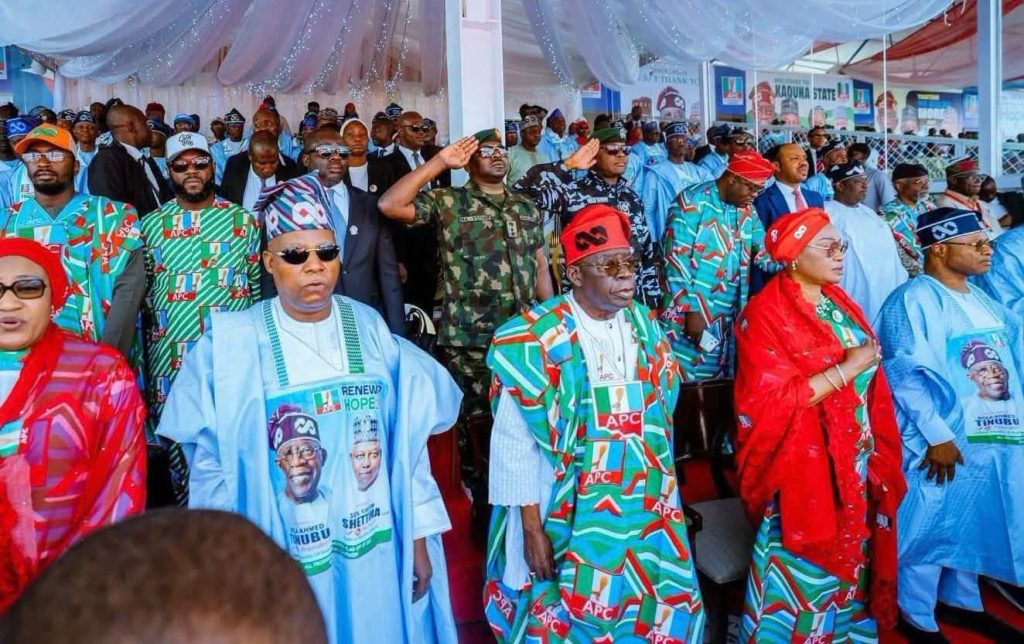
Former Minister of Youth and Sports Development, Barrister Solomon Dalung, has claimed that a recent All Progressives Congress (APC) gathering in Kaduna State exposed what he described as a growing disconnect between political mobilisation and genuine public support for President Bola Ahmed Tinubu.
In a statement made available to Alpha Press Media for publication, Dalung argued that the ability of political parties to mobilise crowds, deploy financial resources and assemble influential political figures should not be mistaken for evidence of widespread electoral acceptance.
According to Dalung, videos reportedly recorded during the APC gathering showed some young people dressed in APC-branded clothing chanting slogans associated with former Vice President Atiku Abubakar, including “Sai Atiku,” “Sau ɗaya ne” and “Falle ɗaya ne.”
The former minister further alleged that other videos from the event appeared to capture individuals warning one another against mentioning President Tinubu’s name, reportedly out of concern that doing so could provoke negative reactions from some youths.
Dalung described the reported developments as politically significant, arguing that they demonstrated the limitations of organised political gatherings as indicators of voter loyalty.
“Kaduna has delivered a message that money cannot silence the voter,” Dalung declared in the statement.
He maintained that although political actors could mobilise, transport, pay or persuade individuals to attend rallies, such arrangements could not necessarily determine how those individuals would exercise their voting rights.
According to him, the real test of political popularity comes after the excitement of rallies has ended and voters are left to make independent electoral decisions.
Dalung stated that powerful political parties might possess the resources to assemble governors, fill venues and project an image of overwhelming support, but insisted that such displays could not automatically produce genuine political conviction.
“A crowd may be assembled; but the electorate cannot be commanded,” he stated.
The former minister argued that the distinction between political spectacle and public sentiment remained critical to understanding electoral behaviour, particularly as political activities gradually intensify ahead of the 2027 general elections.
He maintained that political leaders who rely primarily on the size of crowds at rallies risk misreading the actual preferences of the electorate.
Drawing a comparison with the last Osun State governorship election, Dalung alleged that political desperation and intense competition had contributed to circumstances in which lives were lost.
He further claimed that despite the involvement of influential governors and powerful political interests, the election demonstrated what he considered the capacity of voters to resist attempts to impose political preferences through established party structures.
Dalung cited the Osun experience to support his argument that political influence, financial resources and high-profile endorsements do not necessarily guarantee electoral success.
The former minister also warned political officeholders against assuming that their present influence or control of political structures would automatically translate into lasting public support.
According to him, political power is temporary, and displays of dominance can ultimately expose a failure to understand changing public attitudes.
“Political power is temporary. Today’s display of dominance can become tomorrow’s evidence of miscalculation. Leaders who study only the size of the crowd may miss the direction of the public mood,” Dalung stated.
He further maintained that while political organisers could control the arrangements, atmosphere and presentations at campaign gatherings, they could not dictate the final decisions of voters.
“You can arrange the welcome. You can control the stage. But you cannot write the verdict,” he declared.
Concluding his statement, Dalung interpreted the reported reactions at the Kaduna gathering as a message of political rejection, describing the sentiment he believed the event conveyed with the Hausa expression “Ba ma yi,” loosely translated as “We are not interested” or “We reject it.”
Alpha Press Media | www.alphapressmedia.com