By Abdulwahab Muhammad
Publisher, AlphapressMedia
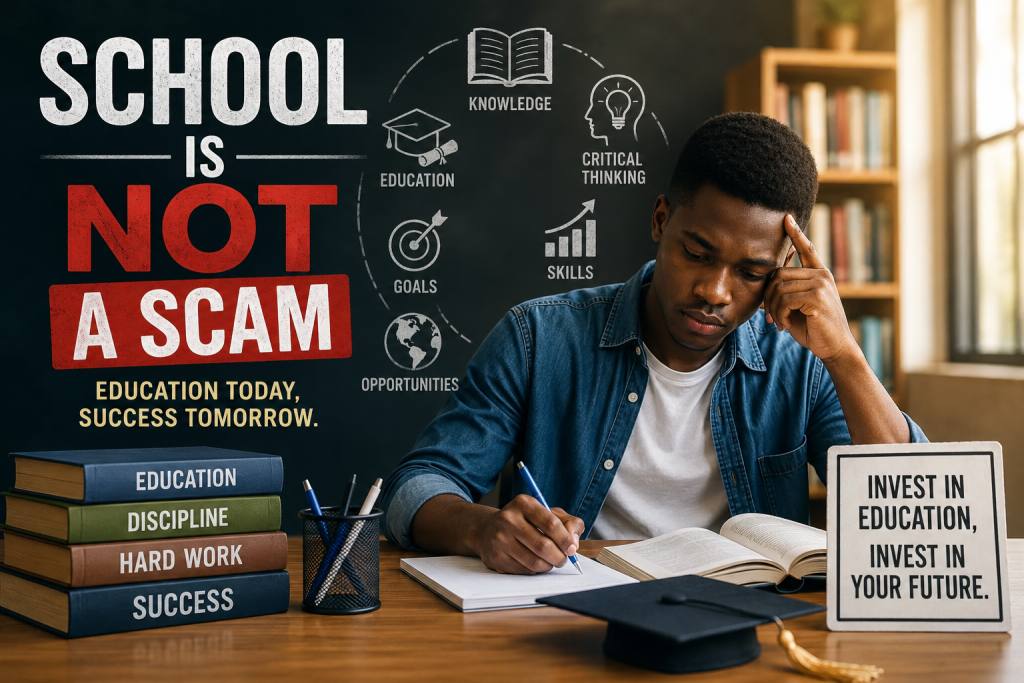
In an era dominated by social media influencers, instant wealth narratives, and viral motivational content, one phrase has become increasingly common: “School is a scam.” The statement resonates with many frustrated graduates who struggle to secure employment despite years of academic pursuit. But does this frustration justify branding education as a scam? The answer is a resounding no.
It is undeniable that a university degree no longer guarantees automatic employment or financial prosperity. Today’s economy is highly competitive, and employers increasingly demand practical skills, innovation, adaptability, and entrepreneurial thinking alongside academic qualifications. However, this changing reality does not diminish the value of education—it simply highlights the need for a more dynamic approach to learning.
Education has never been solely about getting a job. It is about acquiring knowledge, developing critical thinking, building character, and preparing individuals to make informed decisions throughout life. Schools nurture doctors who save lives, engineers who build roads and bridges, teachers who shape future generations, scientists who drive innovation, journalists who hold power accountable, and countless professionals whose contributions sustain modern society.
Those who argue that school is a scam often point to successful entrepreneurs and celebrities who achieved greatness without completing formal education. While such examples exist, they are exceptions rather than the rule. Even many successful business leaders acknowledge that learning—whether through classrooms, mentorship, or self-education—was fundamental to their achievements. Education takes many forms, but dismissing formal schooling entirely is both misleading and harmful.
The real challenge lies in ensuring that educational systems evolve with the demands of the modern world. Governments, institutions, and policymakers must prioritise curricula that combine academic excellence with vocational training, digital literacy, entrepreneurship, innovation, and problem-solving. Students, on their part, must recognise that certificates alone are no longer enough; they must continuously acquire relevant skills and embrace lifelong learning.
For young people, abandoning education because of temporary economic hardship would be a costly mistake. Knowledge remains one of the most valuable assets any individual can possess. It opens doors, expands perspectives, strengthens confidence, and provides the foundation upon which meaningful success is built.
Rather than discouraging education, society should demand better educational systems, stronger links between schools and industry, and more opportunities for graduates to apply their knowledge productively.
School is not a scam. Poor planning, outdated systems, and the failure to adapt to changing realities are the real challenges. Education remains one of humanity’s greatest tools for personal transformation, national development, and sustainable progress.
As we navigate the opportunities and uncertainties of the 21st century, let us inspire young people not to abandon education but to complement it with practical skills, innovation, and resilience. The future belongs not only to those who are educated, but to those who never stop learning.