By Abdulwahab MuhammadSenior Special Assistant on Communication to the Governor of Bauchi State
By Abdulwahab MuhammadSenior Special Assistant on Communication to the Governor of Bauchi State
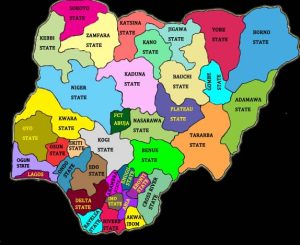
In a country where discussions about local government administration are often dominated by concerns over dependence on federal allocations, a remarkable story has emerged from Bauchi State—one that deserves national attention.According to recent fiscal data highlighted by BudgIT, Bauchi State’s 20 Local Government Areas generated an impressive ₦7.5 billion in Internally Generated Revenue (IGR) in 2024, placing the state at the top of the national ranking among states whose local governments reported revenue generation.This achievement is not merely a statistic. It is a testament to leadership, institutional reforms, accountability, and the deliberate effort to build a viable economy from the grassroots upward.A New Narrative for Local GovernanceFor decades, local governments across Nigeria have been perceived largely as administrative extensions dependent on monthly allocations from the Federation Account. The prevailing belief has been that local councils lack the capacity, structures, and economic base to generate meaningful revenue independently.Bauchi State has challenged that narrative.The emergence of the state as the highest-performing local government revenue generator in the country demonstrates that with vision, commitment, and proper governance structures, local councils can become engines of development rather than mere recipients of federal transfers.What makes this achievement even more significant is that it comes from a state often classified among Nigeria’s predominantly agrarian economies. Yet, through improved revenue administration, enhanced economic activities, strengthened market systems, and prudent governance, Bauchi’s local governments have collectively produced a result that now commands national recognition.The Bala Mohammed EffectSince assuming office in 2019, Governor Bala Abdulkadir Mohammed has consistently pursued policies aimed at strengthening institutions, expanding economic opportunities, and deepening governance at all levels.His administration has invested heavily in infrastructure, agriculture, commerce, urban renewal, rural development, and empowerment programmes that have stimulated economic activities across the state.Markets have expanded. Commercial activities have increased. Rural economies have become more vibrant. New infrastructure has improved access and connectivity. These interventions have naturally broadened the revenue base available to local governments.The result is now evident in the numbers.Revenue generation does not happen in a vacuum. It is usually a reflection of economic activity, administrative efficiency, and public confidence. The performance recorded by Bauchi’s local governments indicates progress in all three areas.Beyond Revenue: A Measure of DevelopmentThe significance of this accomplishment extends beyond financial figures.Revenue generated at the local level translates into greater capacity to provide basic services, maintain infrastructure, support community projects, and address local developmental needs.When local governments become financially stronger, communities become stronger.This is why Bauchi’s leadership position in local government revenue generation should be viewed not merely as a fiscal milestone but as an indicator of growing institutional capacity and grassroots development.A Model Worth StudyingAt a time when many states are grappling with questions about local government effectiveness, Bauchi State has provided a practical example of what is possible when governance is anchored on reform, accountability, and economic expansion.The achievement should encourage policymakers, development partners, and governance experts to study the factors driving Bauchi’s success and identify lessons that can be replicated elsewhere.The Road AheadWhile this accomplishment deserves celebration, it should also serve as motivation to do more.The challenge now is to sustain the momentum, strengthen transparency mechanisms, expand the tax net without burdening citizens, support businesses, and ensure that every naira generated translates into visible development for the people.For Bauchi State, the message is clear: the journey towards economic self-reliance and grassroots prosperity is well underway.And for the rest of the country, Bauchi’s emergence as Nigeria’s leading local government revenue-generating state is proof that transformative governance is not measured by rhetoric, but by results.The numbers have spoken. Bauchi is leading the way.End.
In a country where discussions about local government administration are often dominated by concerns over dependence on federal allocations, a remarkable story has emerged from Bauchi State—one that deserves national attention.According to recent fiscal data highlighted by BudgIT, Bauchi State’s 20 Local Government Areas generated an impressive ₦7.5 billion in Internally Generated Revenue (IGR) in 2024, placing the state at the top of the national ranking among states whose local governments reported revenue generation.This achievement is not merely a statistic. It is a testament to leadership, institutional reforms, accountability, and the deliberate effort to build a viable economy from the grassroots upward.A New Narrative for Local GovernanceFor decades, local governments across Nigeria have been perceived largely as administrative extensions dependent on monthly allocations from the Federation Account. The prevailing belief has been that local councils lack the capacity, structures, and economic base to generate meaningful revenue independently.Bauchi State has challenged that narrative.The emergence of the state as the highest-performing local government revenue generator in the country demonstrates that with vision, commitment, and proper governance structures, local councils can become engines of development rather than mere recipients of federal transfers.What makes this achievement even more significant is that it comes from a state often classified among Nigeria’s predominantly agrarian economies. Yet, through improved revenue administration, enhanced economic activities, strengthened market systems, and prudent governance, Bauchi’s local governments have collectively produced a result that now commands national recognition.The Bala Mohammed EffectSince assuming office in 2019, Governor Bala Abdulkadir Mohammed has consistently pursued policies aimed at strengthening institutions, expanding economic opportunities, and deepening governance at all levels.His administration has invested heavily in infrastructure, agriculture, commerce, urban renewal, rural development, and empowerment programmes that have stimulated economic activities across the state.Markets have expanded. Commercial activities have increased. Rural economies have become more vibrant. New infrastructure has improved access and connectivity. These interventions have naturally broadened the revenue base available to local governments.The result is now evident in the numbers.Revenue generation does not happen in a vacuum. It is usually a reflection of economic activity, administrative efficiency, and public confidence. The performance recorded by Bauchi’s local governments indicates progress in all three areas.Beyond Revenue: A Measure of DevelopmentThe significance of this accomplishment extends beyond financial figures.Revenue generated at the local level translates into greater capacity to provide basic services, maintain infrastructure, support community projects, and address local developmental needs.When local governments become financially stronger, communities become stronger.This is why Bauchi’s leadership position in local government revenue generation should be viewed not merely as a fiscal milestone but as an indicator of growing institutional capacity and grassroots development.A Model Worth StudyingAt a time when many states are grappling with questions about local government effectiveness, Bauchi State has provided a practical example of what is possible when governance is anchored on reform, accountability, and economic expansion.The achievement should encourage policymakers, development partners, and governance experts to study the factors driving Bauchi’s success and identify lessons that can be replicated elsewhere.The Road AheadWhile this accomplishment deserves celebration, it should also serve as motivation to do more.The challenge now is to sustain the momentum, strengthen transparency mechanisms, expand the tax net without burdening citizens, support businesses, and ensure that every naira generated translates into visible development for the people.For Bauchi State, the message is clear: the journey towards economic self-reliance and grassroots prosperity is well underway.And for the rest of the country, Bauchi’s emergence as Nigeria’s leading local government revenue-generating state is proof that transformative governance is not measured by rhetoric, but by results.The numbers have spoken. Bauchi is leading the way.End.